

 English
Exploring the Enigmatic Þrídrangaviti Lighthouse and Other Icelandic Lighthouses
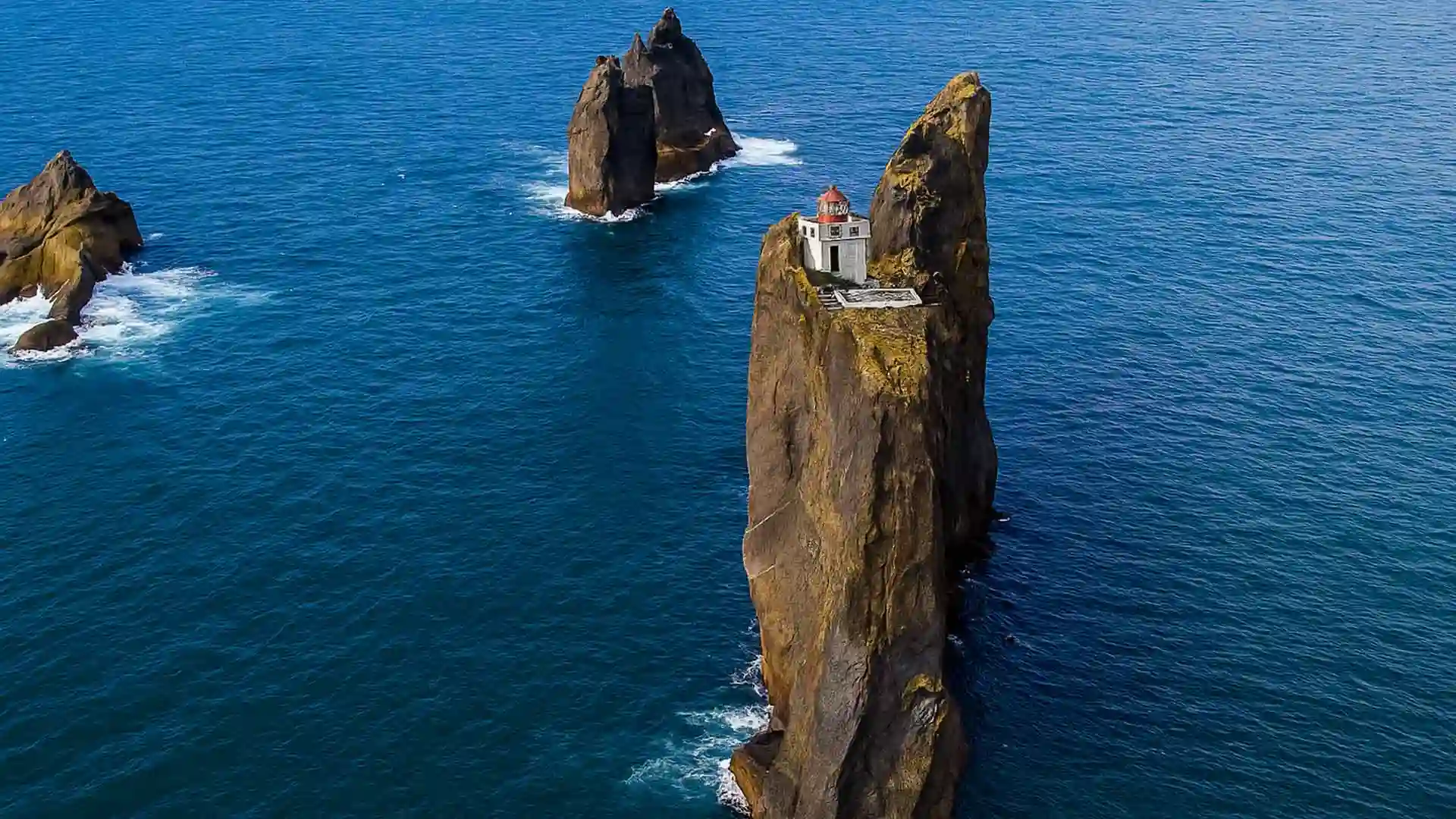
Iceland’s dramatic landscape is famed for its volcanic mountains, glaciers, waterfalls, and mesmerizing natural phenomena, but among its hidden gems are the remote and striking lighthouses that guide mariners through the rugged seas. One of the most legendary among these is the þrídrangaviti lighthouse, perched atop a towering basalt sea stack far off the southwest coast. In this article, we’ll explore the fascinating story of the þrídrangaviti lighthouse, journey through other notable lighthouses on Iceland, and share travel tips for the adventurous traveler looking to experience Iceland’s unique coastal landmarks.
The Legendary Þrídrangaviti Lighthouse
The þrídrangaviti lighthouse is not just any beacon; it is considered one of the most isolated and dramatic lighthouses in the world. Situated on Stóridrangur, the tallest of three sea stacks located roughly 7.2 kilometers off Iceland’s southwest coast near the Westman Islands, this lighthouse rises approximately 36 meters above the briny ocean, warning vessels of the perilous rocks below.
Constructed in 1938-1939, the þrídrangaviti lighthouse was originally accessible only by climbing the jagged rock pillars.
Today, reaching the lighthouse requires a helicopter, underscoring its remote and almost mythical status among Iceland’s maritime navigational aids. The name “þrídrangaviti” translates to “Three Rock Pillars Lighthouse,” referring to the trio of sea stacks—Stóridrangur (with the lighthouse), Þúfudrangur, and Klofadrangur—that have long captured the imagination of locals and visitors alike.
You will often find the thridrangar lighthouse used as the English transliteration of þrídrangaviti, making it easier for international travelers and researchers to find information about this incredible site.
Tip: Consider Transfer Options for Easy Exploration of the Lighthouse Route
Enjoy hassle-free travel to Iceland’s remote lighthouses with convenient transfer services in Iceland that let you relax and fully take in the stunning coastal scenery without worrying about driving or navigation. For more freedom to explore diverse and rugged routes, consider renting a 4x4 in Iceland to confidently access all lighthouse destinations.
Other Noteworthy Icelandic Lighthouses to Visit
While thridrangar stands out for its isolation and dramatic setting, Iceland hosts several other fascinating lighthouses worth exploring:
- Dyrhólaey Lighthouse: Located on the southern coast, this lighthouse guards the entrance to the black sand beaches near the famed Dyrhólaey promontory. Visitors can enjoy panoramic views of the ocean and nearby Reynisfjara beach while learning about the lighthouse’s history.
- Strandarkirkja Lighthouse: This lighthouse is near a small, historic church with deep cultural stories. It highlights Iceland’s connection between sea navigation and land-based spiritual landmarks.
- Lighthouses in the Westfjords: The rugged Westfjords region features additional remote lighthouses that mark treacherous waters and provide incredible photo opportunities for travelers seeking quieter, less crowded destinations.
Including these other Icelandic lighthouses in your journey enriches the travel experience and gives a broader perspective on Iceland's maritime heritage.
Dyrhólaey Lighthouse: A Historic Beacon on Iceland’s South Coast
The Dyrhólaey Lighthouse, located on a stunning promontory near the town of Vík on Iceland’s south coast, stands as one of the most important and visually striking maritime landmarks in the country. Originally constructed in 1910, the current lighthouse structure was completed in 1927 and remains the brightest on Iceland’s mainland. Positioned 123 meters above sea level, its powerful light beams reach approximately 27 miles across the Atlantic Ocean, providing crucial guidance to ships navigating the often-treacherous Icelandic coastline.
Visiting the Dyrhólaey Lighthouse offers more than just a glimpse at maritime safety. The site provides spectacular panoramic views of the surrounding black sand beaches, dramatic cliffs, and the famous Reynisfjara beach with its basalt sea stacks. The area is also a haven for bird watchers, especially during puffin nesting season.
This lighthouse forms an essential part of the network of Icelandic lighthouses that not only ensure safe passage for mariners but also embody the rugged beauty and resilience of Iceland’s coastal heritage.
Why Visit Iceland’s Lighthouses?
Iceland’s lighthouses offer more than just navigational safety; they are windows into the country’s rugged coastal life, maritime history, and natural wonders. Explorers and photographers alike find immense inspiration visiting sites like þrídrangaviti, which combine the dramatic power of nature with human ingenuity.
Remote Lighthouses Iceland Travel Tips
- Many of these lighthouses, especially þrídrangaviti, are difficult to access, requiring careful planning.
- A helicopter tour or boat trip is essential to reach some remote locations.
- Combine your lighthouse visits with other nearby attractions such as waterfalls, volcanic formations, and geothermal baths to maximize your Iceland adventure.
Combining Lighthouses with Iconic Iceland Attractions
When planning your visit around þrídrangaviti lighthouse and other lighthouses on your Iceland itinerary, consider blending these visits with well-known spots like the Blue Lagoon or scenic routes around the Golden Circle. For example:
- The Blue Lagoon, often described in travel circles by keywords like blue lagoon scene, offers a relaxing geothermal spa experience after a day of outdoor explorations.
- The Golden Circle tour connects travelers to landmarks like Gullfoss waterfall, Kerid crater, and Þingvellir National Park, creating a well-rounded Icelandic itinerary.
- Nearby nature spots such as klifbrekkufossar waterfall and strandarkirkja church can beautifully complement your coastal lighthouse visits.
This approach creates a seamless travel narrative appealing to both casual vacationers and outdoor enthusiasts.
The History and Uniqueness of Icelandic Lighthouses
Each lighthouse in Iceland has a story. The construction, often in challenging conditions, speaks to the resilience of Icelandic communities and seafarers who relied heavily on these beacons for safety. Many Icelandic lighthouses, like Thridrangar lighthouse, are not just functional landmarks but cultural icons representing national heritage.
If you are passionate about the narratives behind these coastal sentinels, exploring the icelandic lighthouse history will heighten your appreciation for these structures.
Planning Your Trip Along the Lighthouse Route
When exploring Iceland’s iconic lighthouses, flexibility and convenience in transportation are essential. Whether you prefer the freedom of a self-drive adventure or the ease of guided transfers, there are practical options to suit your travel style.
Transfer Services and Shuttle Options for Lighthouse Routes
Many travelers recommend using transfer or shuttle services to visit popular lighthouse routes, especially in the more accessible areas such as the South Coast Lighthouse Trail. This scenic coastal route, stretching about 50 kilometers and linking several charming seaside villages and lighthouses such as Selvogsviti, Hafnarnesviti, and Knarrarósviti, is a favorite among visitors seeking a full-day excursion without worrying about driving logistics.
Transfer services often operate from Reykjavik or Keflavik Airport, providing comfortable, reliable rides directly to lighthouse destinations. These transfers usually include helpful local guides or drivers familiar with the best viewpoints and nearby attractions. Some offer personalized door-to-door services or shuttle buses along the routes. For instance, travelers often use shuttle connections to reach the Blue Lagoon and nearby lighthouses, with options for airport pickups, enhancing the overall travel convenience.
Self-Drive Exploration with Hot Car Rental Deals
For those who prefer independence and want to explore at their own pace, renting a car from Hot Car Rental Deals is an excellent choice. Renting a vehicle gives you the freedom to create your own itinerary, whether it’s a dedicated lighthouse tour or combining stops at other famous Icelandic sights like the Golden Circle, Blue Lagoon, or waterfalls such as Klifbrekkufossar.
Travelers frequently recommend driving popular routes like the South Coast Lighthouse Trail, which is manageable within a day but can easily be extended for additional sightseeing. You can also consider longer adventures such as the Ring Road, which loops around the island and passes numerous lighthouses and natural landmarks. With your rental car, you can access both well-known and remote lighthouses, tailoring stops based on your preferences and timing.
Combining Both for Ultimate Flexibility
Some visitors opt for a hybrid approach: using transfer services for the most remote or challenging locations—such as the legendary Þrídrangaviti Lighthouse that requires specialized access—while renting a car for other parts of their trip. This allows you to experience the best of Iceland’s coastal wonders comfortably and safely without the stress of navigating unfamiliar roads at all times.
At Hot Car Rental Deals, we offer a range of vehicles suited for Iceland’s roads, including compact cars for city and smooth highway driving as well as SUVs for rugged terrain and gravel roads near remote lighthouses. Our rental packages come with clear terms and support so you can confidently explore Iceland’s diverse and stunning lighthouse routes.
Frequently Asked Questions
Does anyone live at Þrídrangar Lighthouse?
No, Þrídrangar (Þrídrangaviti) Lighthouse is uninhabited and has no permanent residents. It is located on a remote basalt sea stack about 7.2 kilometers off Iceland’s southwest coast, reachable only by helicopter. Maintenance teams visit occasionally but no one lives there full-time.
How did they build the Þrídrangaviti Lighthouse?
The lighthouse was built in 1938-1939 by hand without modern machinery. Skilled climbers from the nearby Westman Islands scaled the steep, slippery sea stacks using spikes and chains they hammered into the rock. For the final ascent, they formed a human pyramid (one climber kneeling, another standing on him, a third climbing on top) to reach the summit. Construction faced harsh weather, strong winds, and the risk of falling into the ocean below. Materials were brought by fishing boats and carried up manually. The lighthouse was completed at the dawn of WWII, with lighting installed three years later due to wartime delays.
Where is Þrídrangar Lighthouse?
Þrídrangar Lighthouse stands on Stóridrangur, the tallest of the three volcanic sea stacks known as the "Three Rock Pillars" — Stóridrangur, Þúfudrangur, and Klofadrangur — about 7.2 kilometers (4.5 miles) off the southwest coast of Iceland near the Westman Islands (Vestmannaeyjar). It rises about 36 meters (120 feet) above the North Atlantic.
What is the most inaccessible lighthouse in the world?
Þrídrangaviti Lighthouse is often cited as one of the most inaccessible lighthouses globally due to its location atop a remote, sheer sea stack surrounded by rough ocean and reachable only by helicopter today. Its original construction required scaling vertical cliffs without the benefit of modern climbing gear, underscoring its extreme isolation.
What is the height and structure of Þrídrangaviti Lighthouse?
The lighthouse is a modest structure, approximately 6 meters (20 feet) tall, painted white with a red roof. Its height is minimal because it sits atop a very tall rock pillar that provides the elevation for its light to be visible to ships.
How can visitors see Þrídrangaviti Lighthouse?
Direct visits to the lighthouse are very limited due to its inaccessibility and safety concerns. The lighthouse can be seen from helicopter tours or boat trips near the Westman Islands, but landing or climbing on the lighthouse is prohibited.
When was Þrídrangaviti Lighthouse automated?
The lighthouse was automated shortly after World War II with the installation of a lamp changer. A helipad was added in the 1950s for easier maintenance access. It was converted to solar power in 1993.
Why was Þrídrangaviti Lighthouse built?
It was constructed to warn ships of the dangerous sea stacks off Iceland’s south coast, which posed a navigational hazard, especially at night or in rough weather. The lighthouse helped reduce shipwrecks in the area by marking these perilous rocks.